Tuesday, October 23, 2012

Ella and Little Yellow

Little Yellow with Ella securing the stairs
I really enjoy meeting other "tiny home people" not just because of the obvious shared interests, but also because they are frequently interesting, engaging individuals who build tiny homes at least in part because it enables them to focus on other interests. Ella is no exception. She studied in Scotland, plays the harp, and recently built, with limited carpentry skills, a tiny home she calls Little Yellow. She also maintains a very interesting blog which chronicles the build. Earlier this month she moved Little Yellow from Southern to Northern California and stopped at a couple of spots on route for brief open houses. It was great to see her home in Soquel and to chat with Ella as well as others. The exterior is essentially a Tumbleweed Fencl, but the interior is customized. There were a number of aspects I particularly liked including:
  • Use of natural wood. The first thing you notice is the interesting branch that serves as the corner post (purely aesthetic) near the door. The interior also features natural wood in places such as the coat rack and bench legs.
  • The kitchen counter, which she had done professionally, is spectacular. The interesting grain patterns and natural, biomorphic edge turn a kitchen counter into an objet d'art. I definitely see the merits of having a professional complete certain focal aspects of a tiny home.
  • Custom trim work. Ella cut attractive designs in the trim which seem to automatically draw the eyes.
  • The shower is a converted livestock trough: significantly less expensive with more character than a traditional shower. I assume it also can be used as an old-school bathtub.
The loft is a traditional Fencl loft and I remain convinced that such a loft is simply too small for me. At the risk of sounding like some sort of tiny home prima donna, I'll require both a loft skylight as well as an alternative roof design in my tiny home.

In Soquel several people asked Ella what she was selling or which company she represented. She indicated she wasn't selling anything and she scheduled open houses simply because she knew many people were interested in tiny homes. I'm certain I'm not the only one who is both grateful and inspired.

Beautiful kitchen counter
Livestock trough becomes shower
Traditional Fencl loft
Natural wood, custom trim

Tuesday, October 16, 2012

Tiny mobile home at Fleet Week

Last week San Francisco hosted Fleet Week, an annual event where military ships dock in the Bay and different branches of the military demonstrate their wares. This mobile unit displayed on Marina Green immediately caught my eye. Unfortunately, they weren't permitting tours at the time. Nonetheless, I particularly like the open-air design and integrated jack stands.

Wednesday, October 10, 2012

Hardly Strictly Bluegrass

Ralph Stanley and The Clinch Mountain Boys play the Banjo Stage last Sunday

If you live in the SF Bay Area you are probably familiar with Hardly Strictly Bluegrass, the 3-day, multi-stage, free music festival in Golden Gate Park. Many locals avoid it because of the enormous crowds, but I'm still a devout fan. The HSB lineup (list of scheduled musicians) is always amazing and there are frequently difficult decisions with six different stages. The musicians themselves generally seem happy to be there and often play together in impromptu, sometimes unusual, combinations. The positive energy extends to the crowds where people generally are unusually polite and friendly given the mass of humanity.

While this year was no different, the festival was also melancholic as Warren Hellman, the founding partron of HSB, died last year and this is the first festival without him. Hellman was a successful private equity financier, as well as a philanthropist and banjo player. Even if you had never heard of him before last weekend, it was clearly evident from the frequency and sincerity of the many heartfelt tributes throughout the weekend that Hellman was the heart and soul of HSB. But his spirit continues, and so does HSB which Hellman funded well into the future so the festival will not require commercial support (which would profoundly alter HSB). Appropriately, the meadow where the HSB stages are built each year has been officially renamed "Hellman Hollow."

There were several tiny mobile homes in attendance

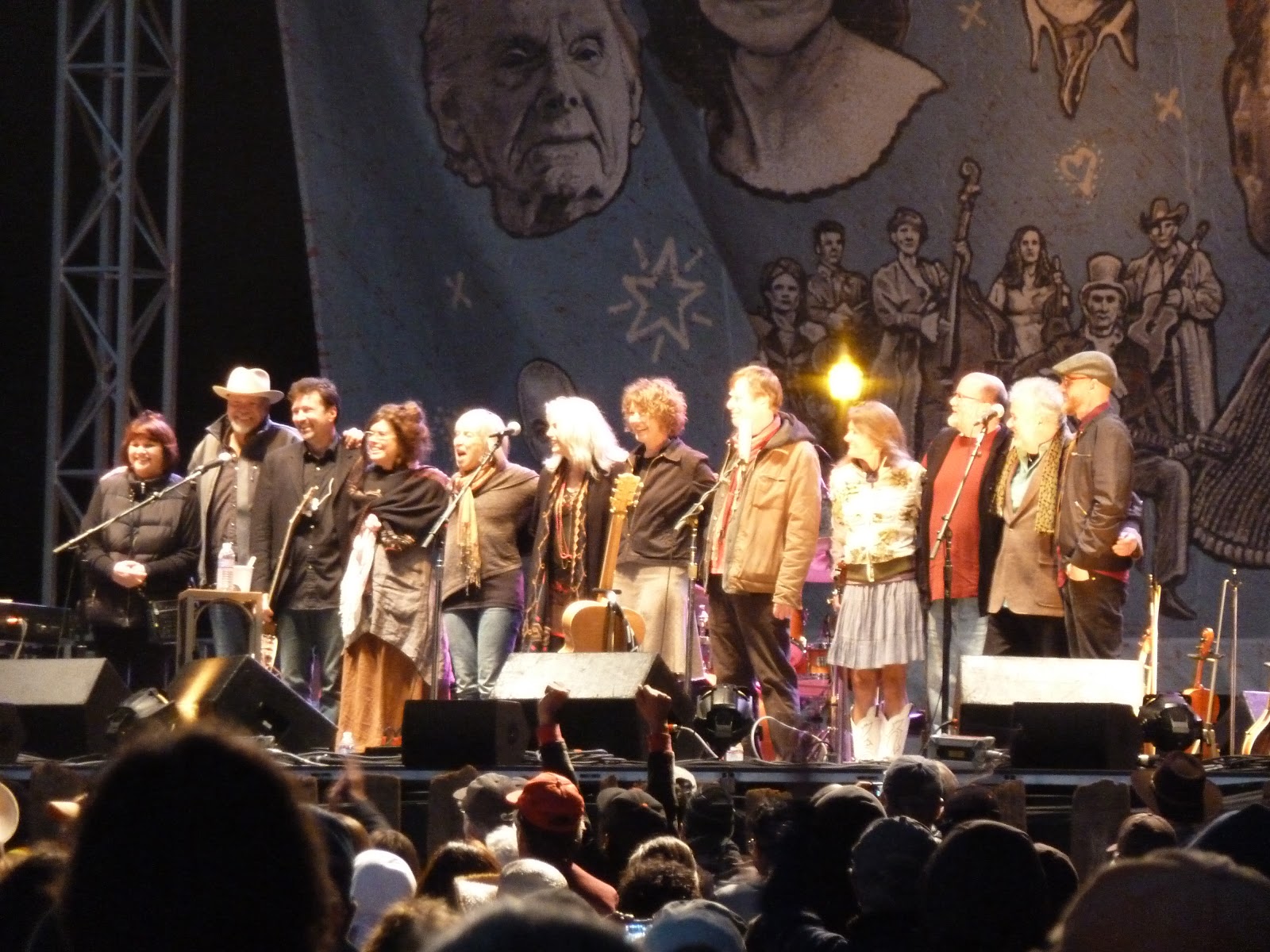
Emmylou Harris, as she does every year, closing show with help from some friends

Hellman Hollow

Friday, September 7, 2012

Olympic Peninsula & backpacking takeaways


Every year I take an extended hiking trip somewhere in the backwoods with a few friends from the Bay Area. This year, after a fair amount of planning, we spent a couple of weeks in August on the Olympic Peninsula (WA). Expectations were high, yet they were still exceeded by the region's profound beauty and amazing diversity. Most of the time was spent in Olympic National Park including the Seven Lakes Basin area, Hoh Rain Forest and the rugged coast north of Rialto Beach. We also spent some time in Port Townsend, a friendly little maritime community, and briefly stopped at the recently removed Elwha Dam, reportedly the largest dam removal in the world to date.

In the interest of continuous improvement, it can be useful after an extended backpacking adventure like this to consider takeaways or lessons learned. A few of the more salient takeaways from Olympic Peninsula include:

1. Effective and redundant water purification systems
Water from crystal clear alpine lakes in the Olympic Mountains is probably fine, but I prefer to purify all my water anyway because it should be a relatively simple process which ensures I won't be sick later. Unfortunately, my Katadyn Hiker water filter, only a few years old, broke on the first backpacking day. The plastic that secures the intake hose snapped off. We had iodine tablets, but a ranger had warned us that iodine was ineffective against Cryptosporidium which could be a risk when we got to the coast. We were able to purify water with my Katadyn by placing the entire thing in a small pot instead of using the intake hose, but the lack of a pre-filter caused the entire system to become clogged. Towards the end of the trip dirt was getting through the system and we started boiling our water. Must find something better...

2. Realistic planning; maximize day hiking
There is much to see in Olympic Peninsula and we planned an overly ambitious trip with many different campsites. After an arduous Day 3 we were all so exhausted we needed to modify the plan in order to recover before donning enormous backpacks again. Fortunately, we found an accommodating ranger. Obviously, it's much easier to hike with a small day pack rather than your full backpack, and we might have actually covered more ground with fewer campsites and more day hiking. Day hiking also enables each individual to choose what to do on any given day while still remaining part of the group.

3. Minimize car camping
We modified our plans, but still wanted to see the Hoh Rain Forest, so we decided to car camp near the Hoh River trailhead. Backpacking allows you to enjoy nature in the absence of people and vehicles, but car camping generally does no such thing. After eventually driving to the coast and realizing we couldn't make much progress hiking up the coast before dark, we lamented having to car camp another night. However, we discovered a mile-long gravel bar in the Quillayute River which was an ideal spot to pitch our tents for the night before starting the trek up the coast the next day.

Coastline campsite
Rustic pit toilet with spectacular view

Thursday, August 9, 2012

Kukri looking for work...

A few weeks ago I was gathering wood while camping when I decided I really needed a good hatchet that could fit in my backpack. After a little research I realized I wanted something that could also clear brush. I finally settled on a Nepalese machete-like knife called a kukri:
While the kukri is often considered a weapon (utilized by the Nepalese Army and Gurkha units in the British and Indian armies), it is also a very effective tool for a wide range of chopping and cutting tasks. However, at ~2 pounds it's probably too heavy for extended backpacking trips. There will be plenty of work once I'm living in a tiny home outside the city, but while I'm still living in SF there are limited opportunities to give the kukri a good workout. So, if you live in the SF Bay area and need some help chopping or clearing my kukri and I will happily assist...

Thursday, July 19, 2012

Sea Ranch Chapel


Last week I had the good fortune to spend a few days with friends in Sea Ranch, a Sonoma County planned community known for its dramatic coastline, secluded beaches, as well as its characteristic architecture. A design review process ensures that homes don't dominate the beautiful natural landscape. While the homes certainly aren't cookie-cutter replicas, they do share key characteristics including unpainted wood siding/shingles, and many large windows that bring the landscape and natural light into the home and often help form comfortable interior nooks which are ideal for reading or napping.

One of the most intriguing structures is the Sea Ranch Chapel. This small non-denominational sanctuary, which resembles a hat with a feather protruding from the top, was completed in 1985 and is open to the public. Local materials such as redwood, stones and seashells help ground the chapel in the surrounding environment. The small size creates a very intimate interior where magnificent stained glass windows admit light from different angles and cast exquisite light patterns on the stone floor and redwood seating. The Sea Ranch Chapel, which is also frequently empty and very quiet, is not only something to behold, but is also highly conducive to personal reflection.

 Redwood seats and floral mosaic


Local materials including redwood, stones and seashells (abalone shell pictured here) are utilized in both chapel interior and exterior


Prie-dieu (prayer desk) with embedded shells and wrought iron prayer screen